Connect new components to existing interfaces.
A sensor needs a different mounting spacing, a tool needs a new holder or a camera needs the right position. FORMACT manufactures adapters and brackets that connect your existing components.
Made to suit your task. With CAD data or a description of your requirements.
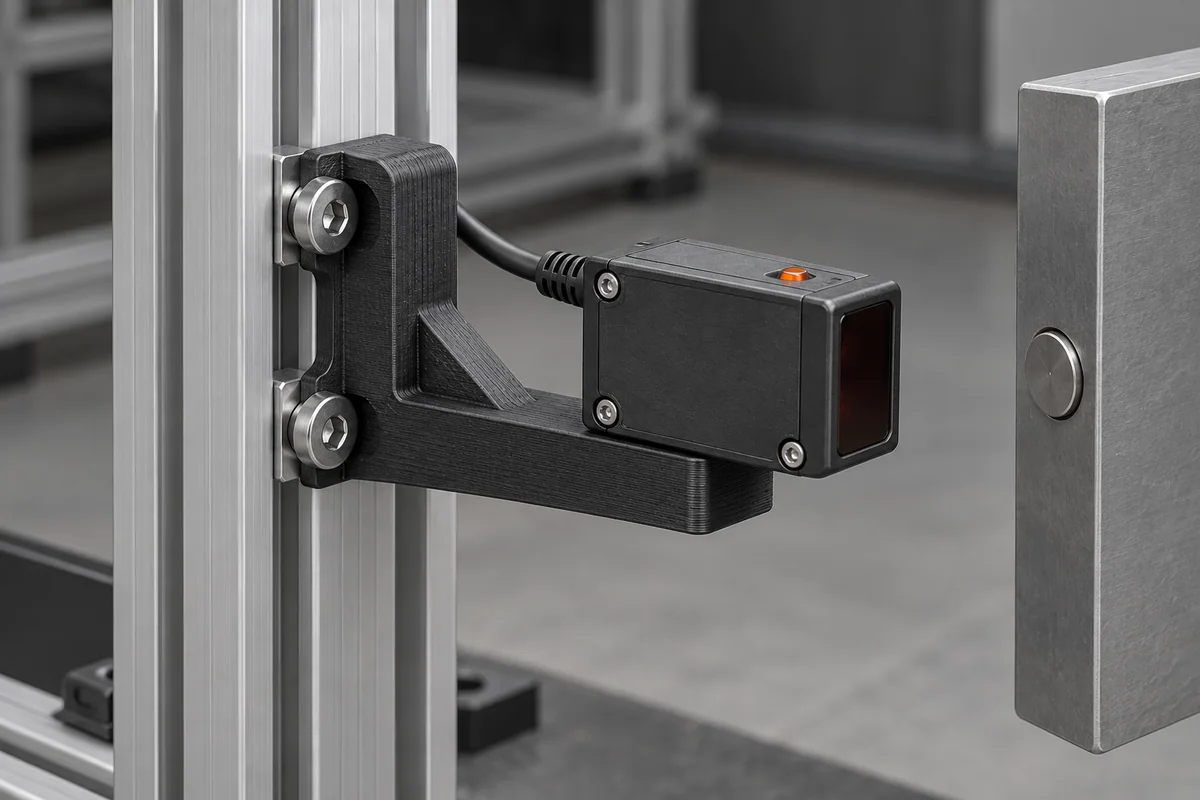
A connection starts with both interfaces.
During a retrofit, new components often fit functionally but not yet geometrically into the existing environment. A custom adapter can connect hole patterns, bridge distances or provide a mounting position. Both connection geometries and the available space are essential. Cable routes, screw access and future disassembly are considered directly in the design.
Sensor mount on an existing machine profile
A bracket connects the profile mounting point to the required sensor position. It can combine a defined offset, protected cable routing and easily accessible screw points.
Adapter for tools and accessories
A tailored transition piece connects an existing interface to a new accessory. Shape, locking and installation path follow the specific connection dimensions.
Camera bracket with a defined viewing direction
A suitable bracket places the camera in the intended position relative to the inspection or transfer point. Field of view, cable connection and surrounding movement areas remain part of planning.
What the right geometry changes.
Bring connection dimensions together
Different hole patterns and spacings are joined in a suitable geometry. Existing mounting points remain the starting point for the solution.
Make installation straightforward
Accessible screw points and defined cable guides help with assembly and later replacement. Handling forms part of component function.
Implement changes precisely
If the new component changes, the corresponding connection side of the adapter can be modified. Existing data provides a clear basis.
From a simple adapter to an assembled bracket.
We check existing CAD data, adapt geometries and design simple adapters to clear specifications. Screws, nuts, threaded inserts or standard profiles can form part of a straightforward assembled unit. For more extensive design work, we involve specialist partners and remain your contact for coordination and manufacturing.
- Connection contours and mounting spacings on both sides
- Installation space, assembly path and tool access
- Cable passages, stops and locating features
Materials for the specific installation site.
An indoor bracket has different requirements from an outdoor adapter. Temperature, environmental media and loads inform the selection.
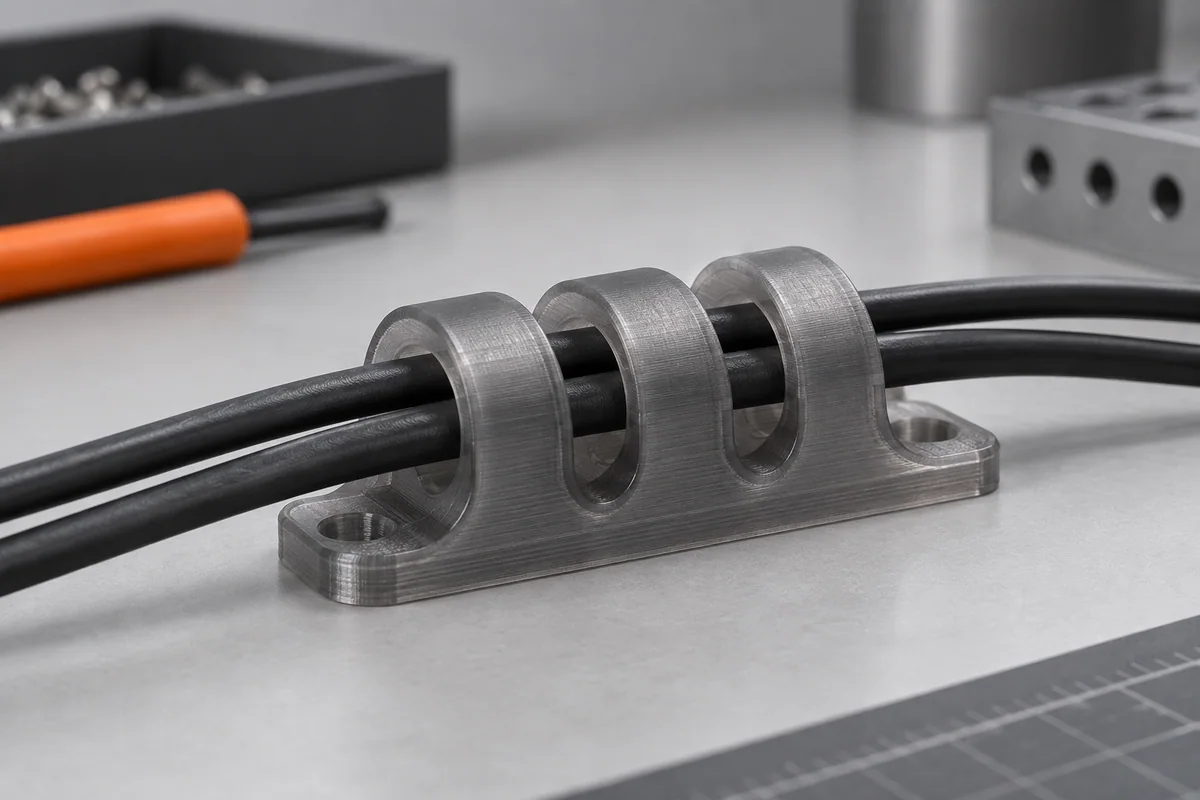 FDM
FDMPETG
Adapters and brackets for general indoor use
- Heat deflection temperature (HDT)
- up to 70 °C
- Tensile strength
- up to 50 MPa
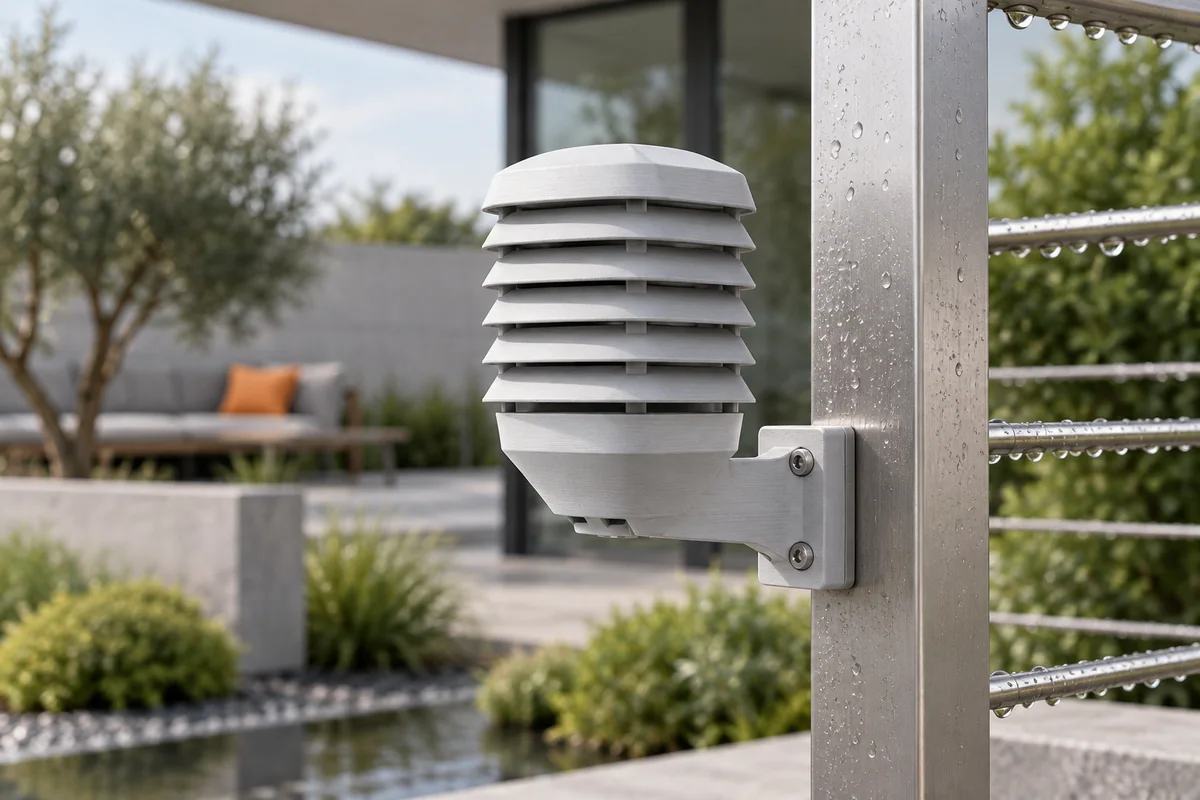 FDM
FDMASA
Brackets intended for outdoor use
- Heat deflection temperature (HDT)
- up to 96 °C
- Hardness
- 92 Rockwell R
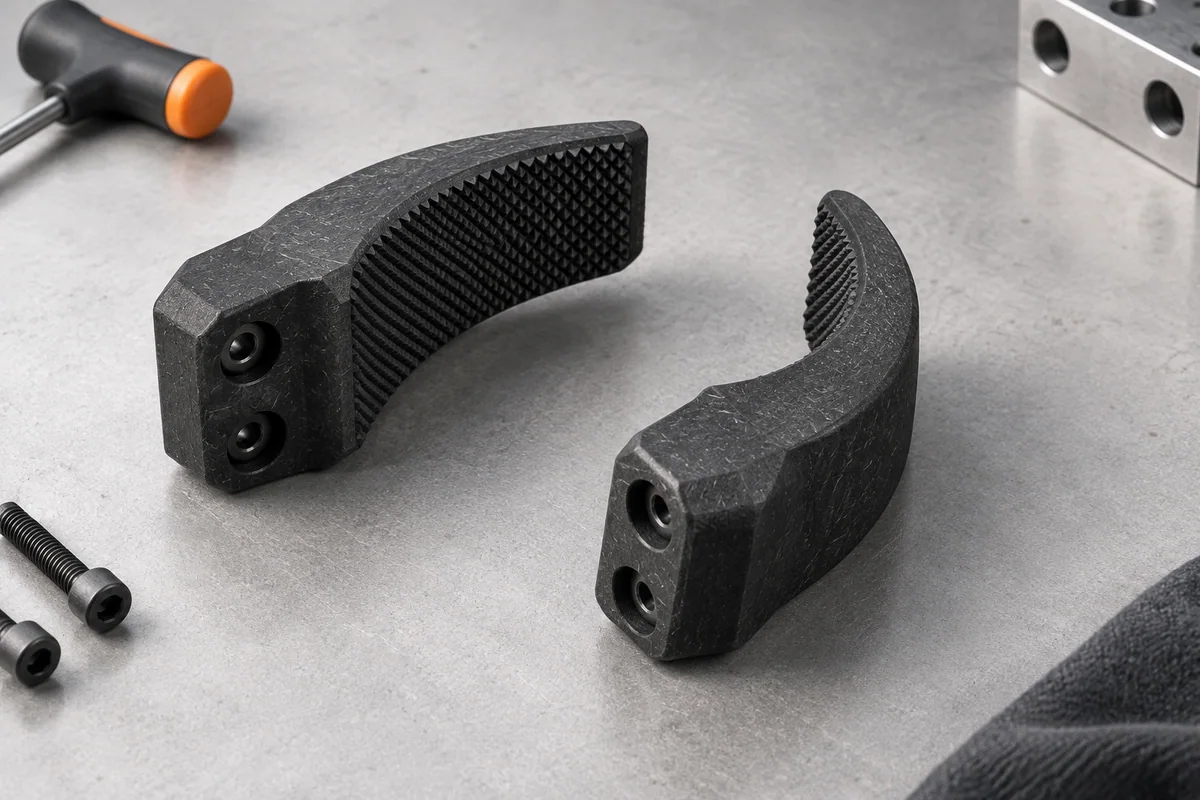 FDM
FDMPA-CF (carbon-fibre-reinforced polyamide)
Rigid connecting elements and spacers
- Heat deflection temperature (HDT)
- up to 147 °C
- Tensile strength
- up to 63 MPa
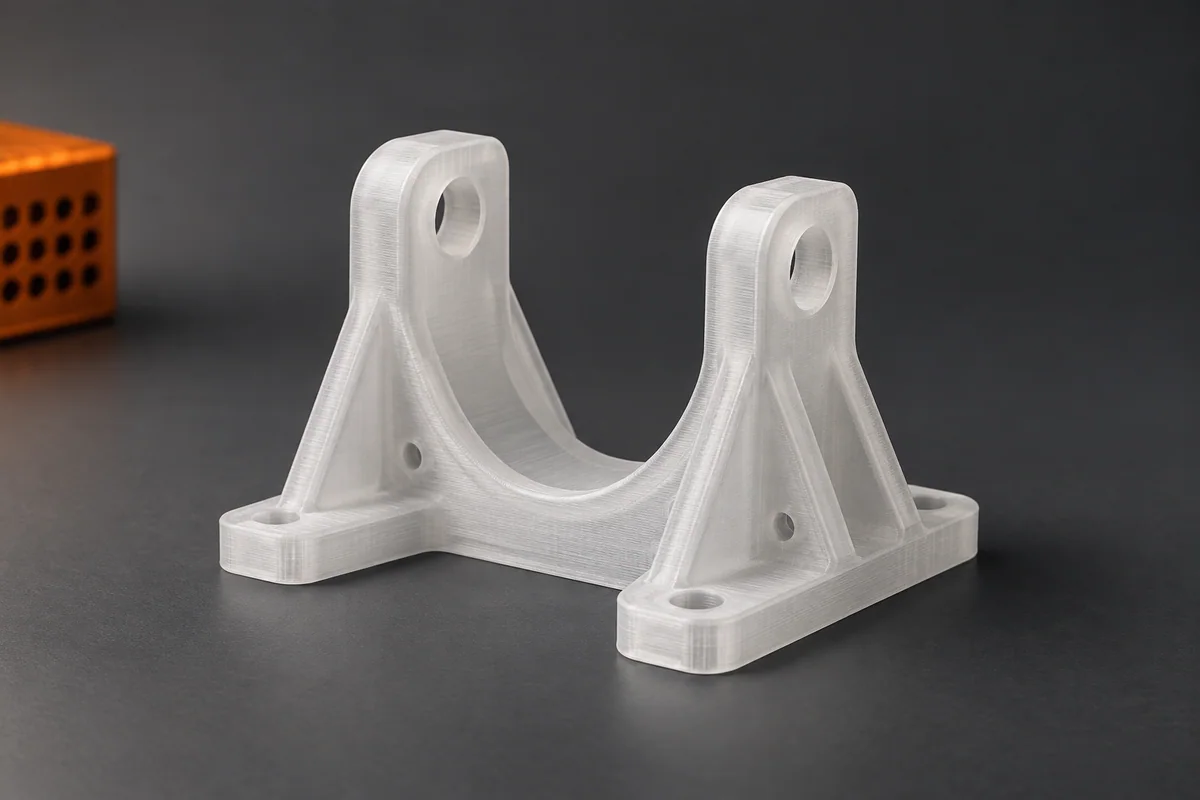 FDM
FDMPolycarbonate / PC
Technical adapters with additional heat exposure
- Heat deflection temperature (HDT)
- up to 135 °C
- Tensile strength
- up to 62 MPa
Create interfaces with FDM or resin.
FDM offers many options for brackets, adapters and geometric transitions. Resin can suit small connection details or fit-check models. Part size, function and required contact surfaces determine the right specification.
What needs connecting to what?
Show us both connection sides and the installation site. CAD files are helpful but not essential: photos, a dimensioned sketch and a description of the new function enable an initial discussion.
Enquire about your custom partGeometry, function and specification follow your task. A description is enough for an initial enquiry; you can add any existing files.