Clear / transparent Resin
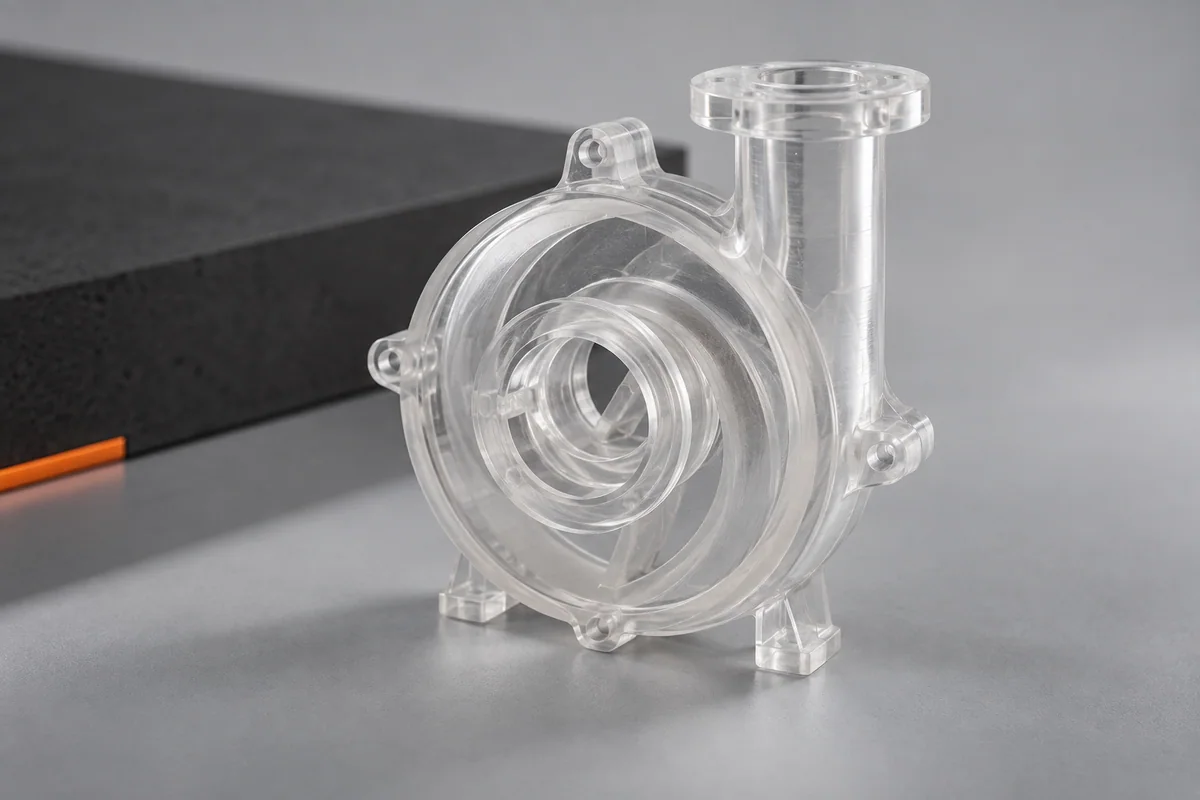
Transparent resin suits applications where seeing inside the part is part of the task. It helps develop housings, demonstrate internal channels and create light-guiding elements. Depending on the desired effect, the surface can be post-processed from matt translucent to significantly clearer.
Typical applications
Transparent housing samples, visual models of channels and fluid paths, lighting prototypes and design objects. Transparent Resin reveals internal geometries and how components interact.
Why Clear / transparent resin?
Transparent parts open up new possibilities for presentation and understanding function. Fine details, a smooth surface and a degree of toughness combine in informative models that reveal more than just the outer shape.
Performance profile
- Heat deflection temperature (HDT)
- up to 51 °C
- Hardness
- 68 Shore D
- Tensile strength
- up to 47 MPa
- Elongation at break
- up to 25 %
Ideas for your application
Product design, device and electronics development, visual models, lighting concepts and technical presentations.
Surface and appearance
Transparent to slightly translucent, depending on wall thickness and finish. Smoothing and polishing can significantly improve clarity.
Designing your part to fit
Keep viewing windows and optically important surfaces free from support marks wherever possible. Consistent wall thicknesses help create an even appearance. Include cleaning and drainage openings for internal channels.
Finishing and post-processing
Sanding and polishing improve the clarity of optically important surfaces. Suitable surface finishing enhances the presentation.
All material properties 6 properties at a glance
- Heat deflection temperature (HDT)
- up to 51 °C
- Tensile strength
- up to 47 MPa
- Flexural strength
- up to 58 MPa
- Elongation at break
- up to 25 %
- Liquid resin density
- 1.12 g/cm³
- Hardness
- 68 Shore D
Your idea. Your part.
Send us your file or describe your idea. You will receive an individual quotation for production.
Enquire with this material