Elastic Resin
Elastic Resin brings a soft, rubber-like feel to detailed 3D-printed models. It is an attractive choice for small damping and contact elements or prototypes that need to compress and bend. Shape and wall construction strongly influence how soft the finished part feels.
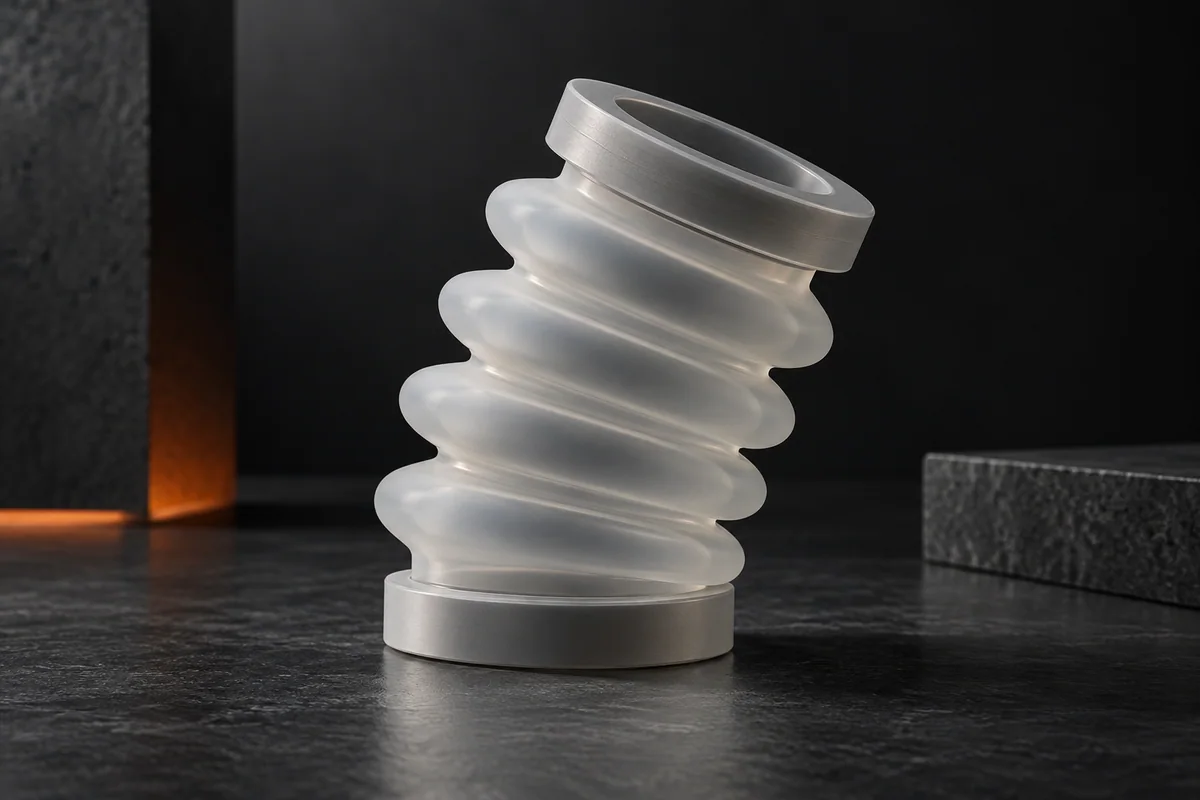
Typical applications
Soft protective caps, cushioning geometries, compressible functional samples and elastic contact parts. Elastic Resin suits detailed models where softness is an important part of the function.
Why Elastic Resin?
The low Shore A hardness offers wide scope for soft, highly deformable geometries. Small cushioning structures, flexible transitions and visual models can be tested directly in their intended handling conditions.
Performance profile
- Hardness
- 43 Shore A
- Tensile strength
- up to 1.5 MPa
- Elongation at break
- up to 180 %
- Liquid resin density
- 1.18 g/cm³
Ideas for your application
Product design, ergonomic studies, damping and contact samples, and teaching and demonstration models.
Surface and appearance
A soft, smooth surface with a transparent appearance. Visibility and clarity depend on wall thickness, cleaning and surface finish.
Designing your part to fit
Support soft surfaces evenly and round loaded transitions. Thin webs, cavities and lattices can be used to adjust compliance. A sample is particularly useful for assessing shape recovery and installation preload.
Finishing and post-processing
Cleanly finished support marks preserve the soft feel and consistent contact surfaces.
All material properties 4 properties at a glance
- Tensile strength
- up to 1.5 MPa
- Elongation at break
- up to 180 %
- Liquid resin density
- 1.18 g/cm³
- Hardness
- 43 Shore A
Your idea. Your part.
Send us your file or describe your idea. You will receive an individual quotation for production.
Enquire with this material