Add flexibility where parts meet.
FORMACT manufactures flexible buffers, protective pads and gripper inserts to your geometry. Contact shape, deformation space and mounting are tailored to the task, from a single TPU insert to a pad in a simple assembly.
Made to suit your task. With CAD data or a description of your requirements.
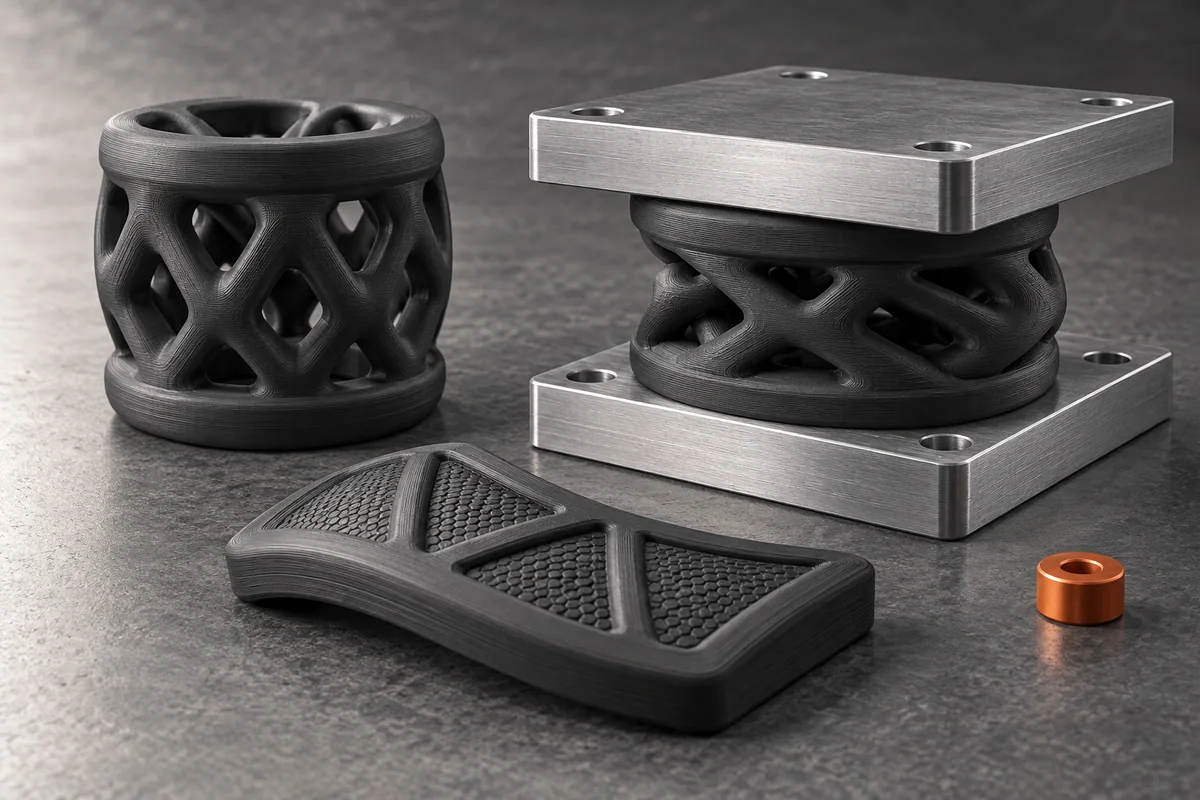
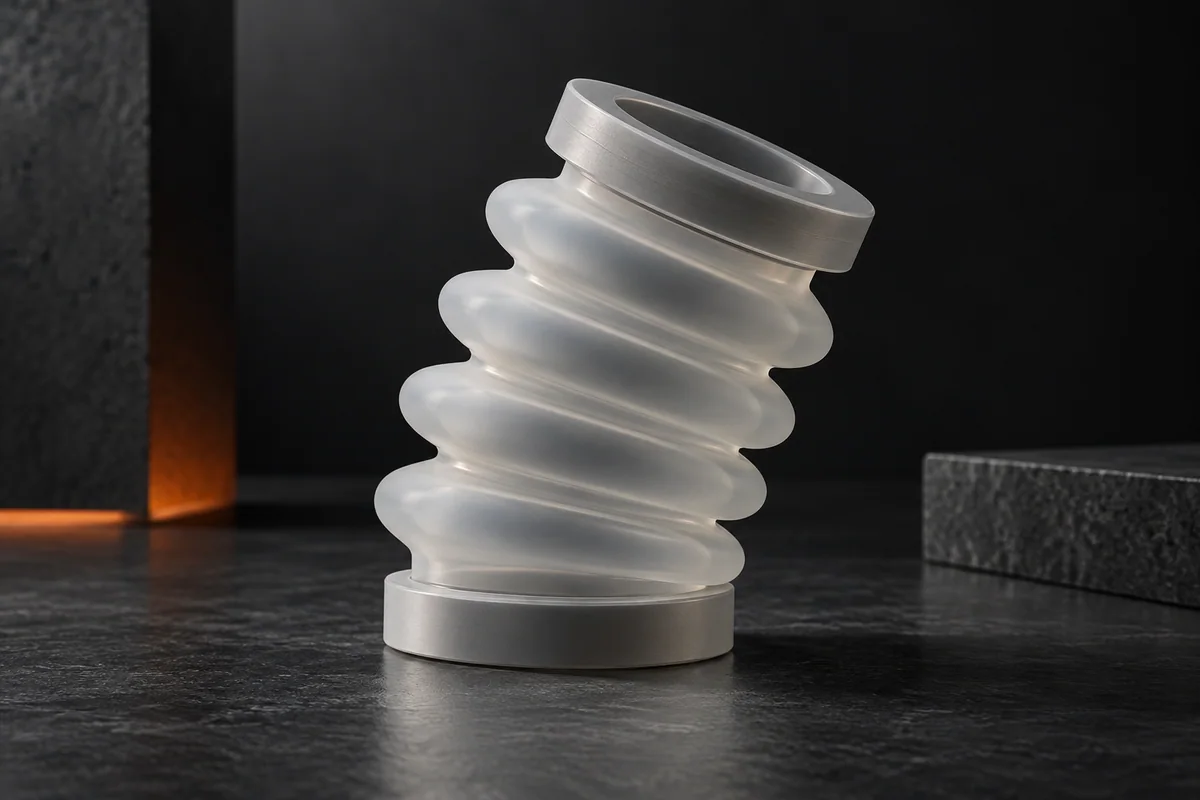
Shape helps determine how a part flexes.
Geometry matters as well as material in a flexible component. Wall structure, clearances and mounting method affect where it can deform. A contact pad is therefore considered together with its carrier. We agree on the desired movement, contact surfaces and how the insert should be fitted or replaced.
Gripper insert with a tailored contact contour
A flexible insert follows the workpiece surface and sits in a rigid jaw body. Its contour and mounting follow the gripping action and intended contact zone.
Protective pad for assembly and placement
A shaped pad separates a component's visible surface from the rigid workpiece carrier. Cut-outs, retaining tabs or a slide-in geometry can define its position on the carrier.
Buffers and elastic stop elements
A contoured buffer is used at a defined contact point. Loads, available deformation travel and desired function form the basis for material and part structure.
What the right geometry changes.
Shape contact locally
Flexibility is provided where workpiece and holder meet. The rest of the carrier can fulfil its own, more rigid role.
Include mounting in the shape
Insertable or screwed-on pads can be geometrically matched to the main body. Assembly and replacement can then be clearly specified.
Assess behaviour on a sample
A specific geometry makes handling and deformation testable. Changes to contour and structure can respond directly to your observations.
Flexible inserts as part of a coordinated solution.
We supply individual flexible parts or combine them with a suitable plastic carrier. Fasteners and locating pins can be added for simple assemblies. A clear contact description helps with design: repeated pressing, an occasional stop or a continuously contacting pad each has different requirements.
- Contact geometry and available deformation
- Mounting on the carrier and intended replacement
- Loads, environment and desired handling
Flexible materials compared.
TPU and TPE are options for flexible contact and protective parts. Flexible resins complement them for small, detailed geometries. The key is how the part should deform under its intended loads.
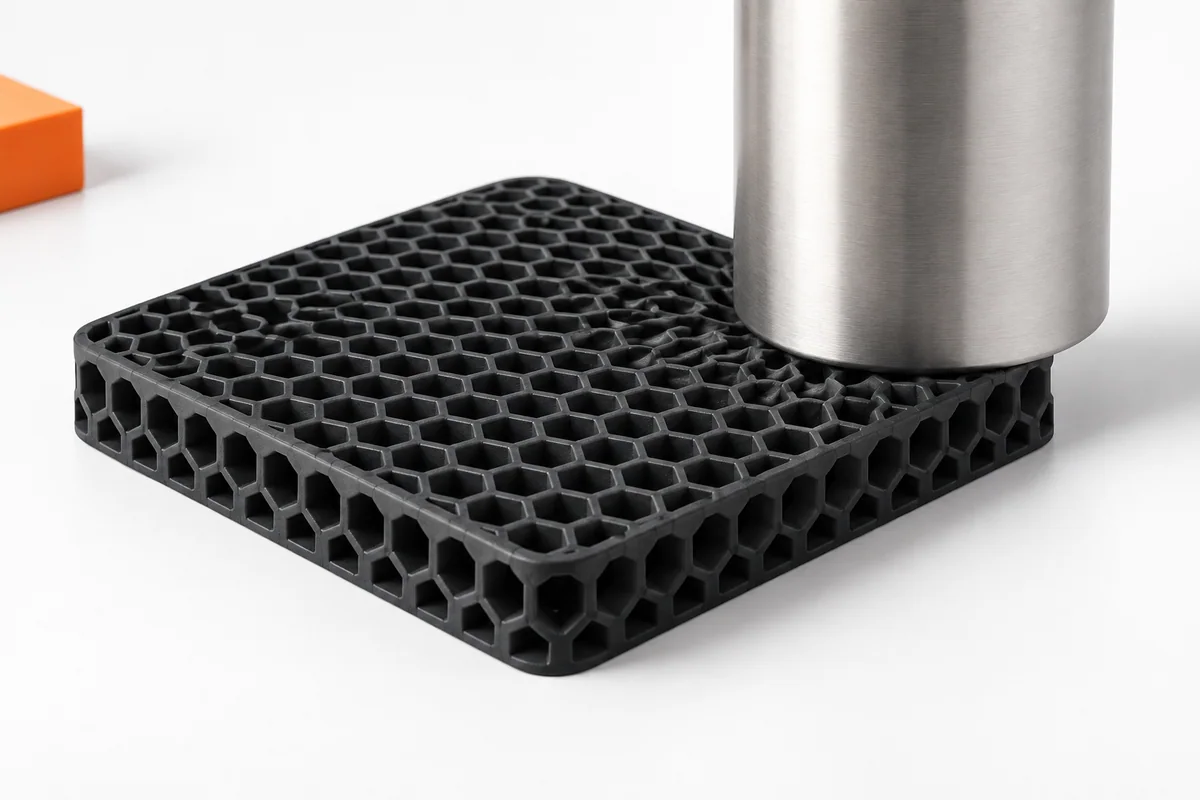 FDM
FDMTPU
Buffers, contact pads and flexible gripper inserts
- Hardness
- 88 Shore A
- Tensile modulus
- up to 42 MPa
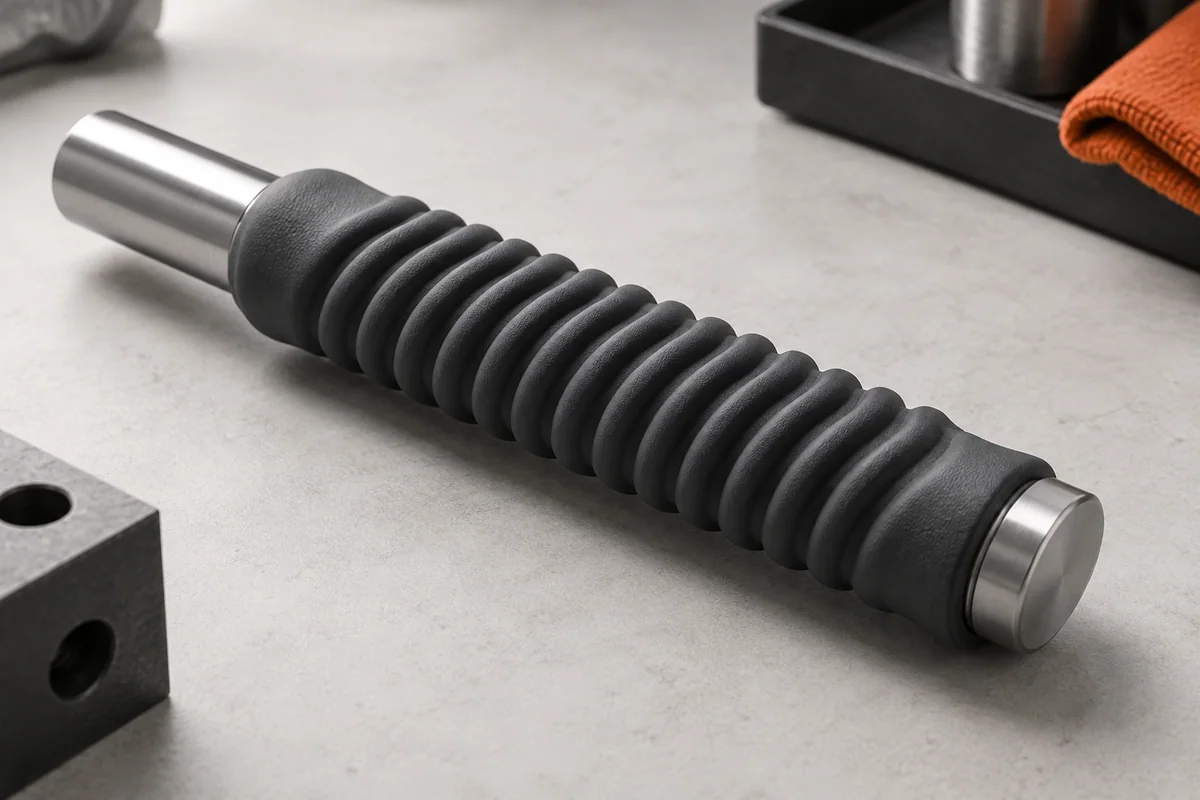 FDM
FDMTPE
Flexible protective and contact elements
- Hardness
- 90 Shore A
- Density
- 1.15 g/cm³
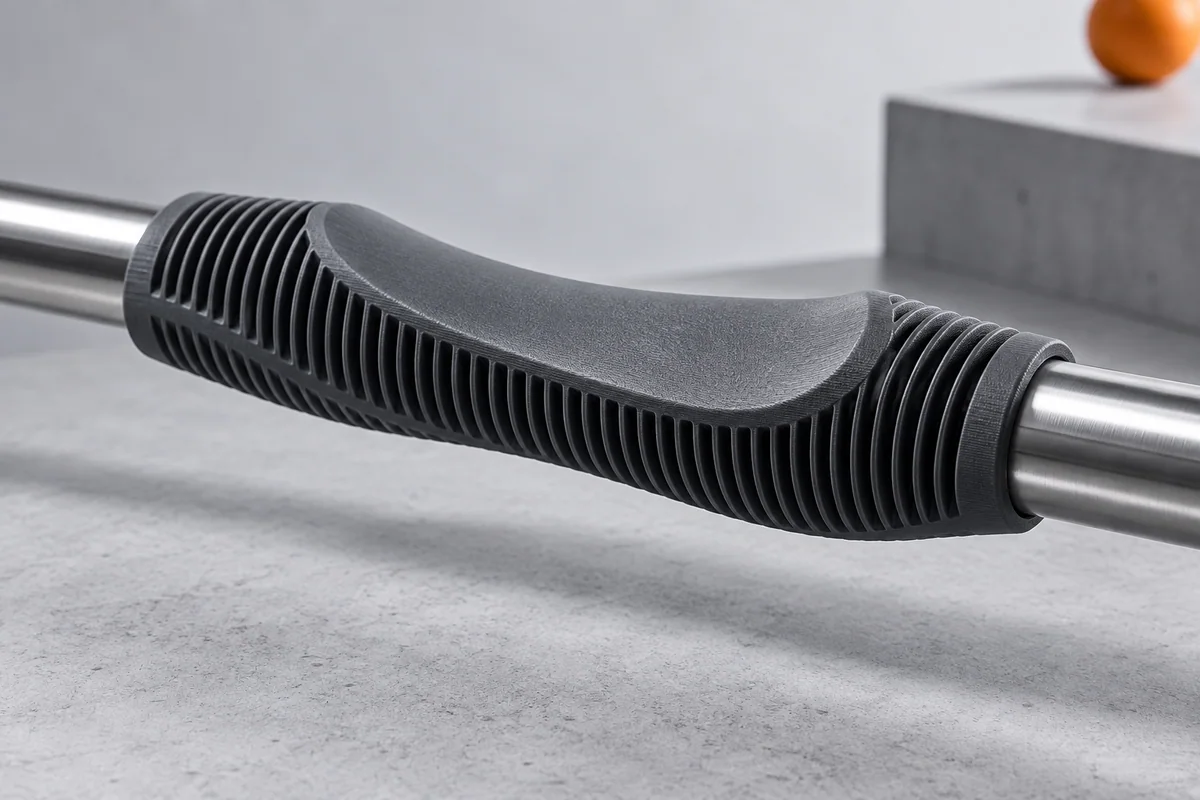 Resin
ResinFlexible Resin
Small flexible parts with fine shape details
- Elongation at break
- up to 80 %
 Resin
ResinElastic Resin
Elastic samples and highly flexible geometries
- Hardness
- 43 Shore A
- Tensile strength
- up to 1.5 MPa
FDM for TPU, resin for further flexible geometries.
FDM enables custom-shaped TPU inserts and protective parts. Flexible and elastic resins suit other detail and deformation requirements. Material, structure and contact loads are considered together so a sample answers the right question.
Where should your part flex?
Show us the contact point and carrier. Describe how the part should move or deform and how often contact occurs. CAD data, a sketch or photos help with the initial design.
Enquire about your custom partGeometry, function and specification follow your task. A description is enough for an initial enquiry; you can add any existing files.